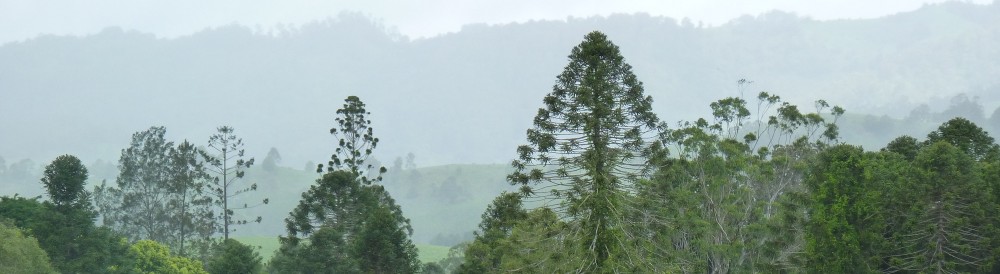
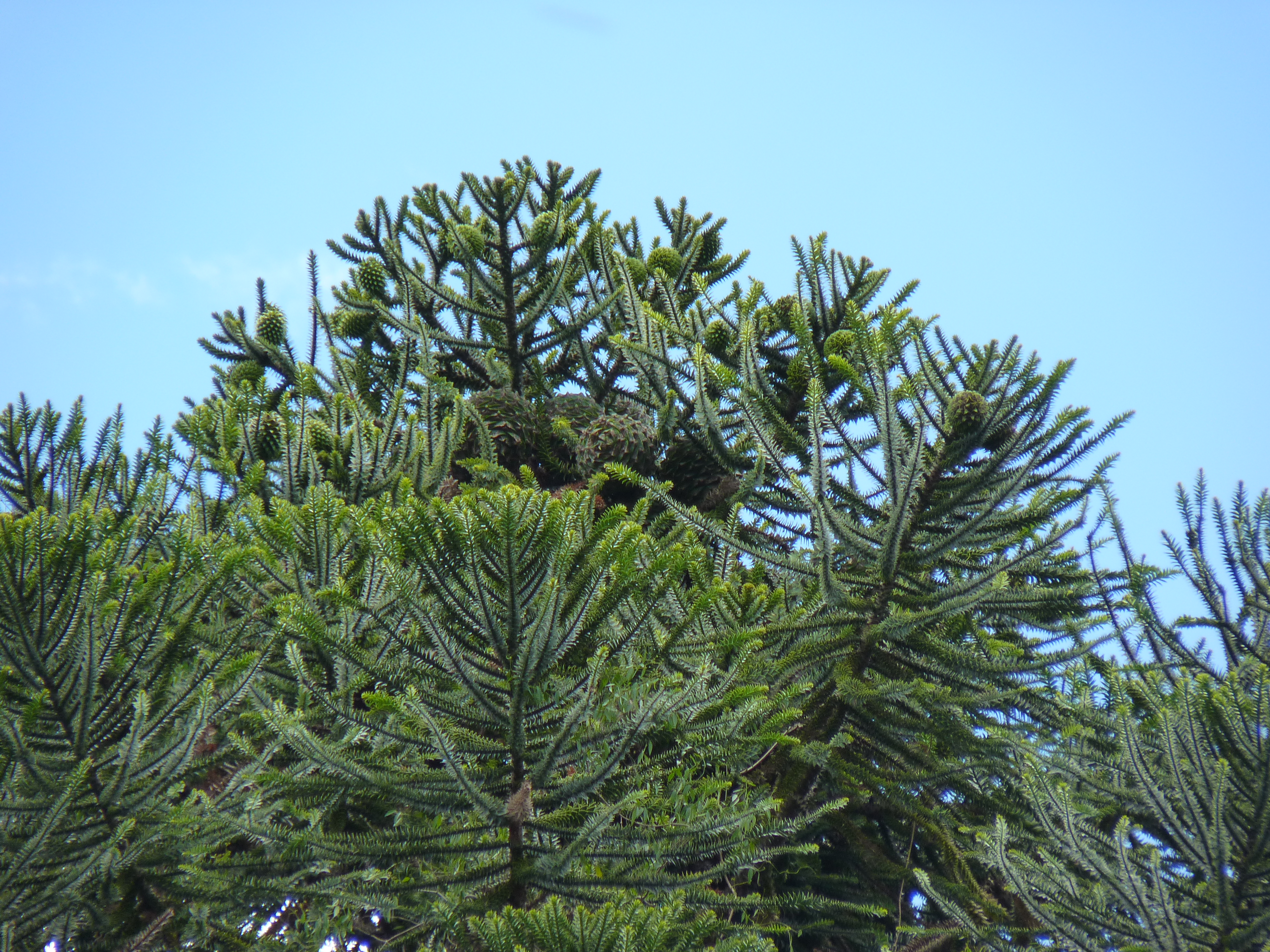
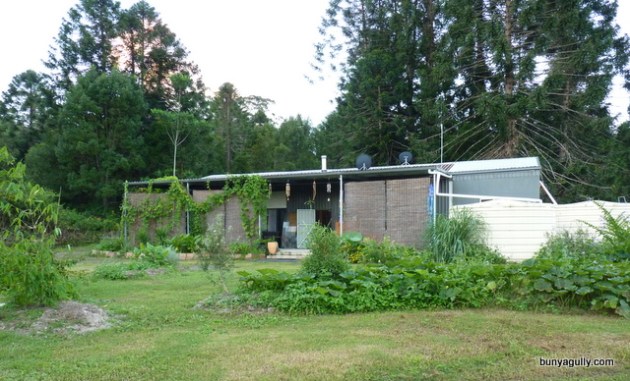
We like our many Auricaria Bidwillii. We have no intention of chopping them down – or not too many anyway. We don’t try to stop them growing, in fact we tend to assist them where possible. But we are currently under active bombardment. Huge nuts are being hurled from the very top of the more mature trees, clearly with the aim of damage and destruction of anyone or thing below. And this is not the first time. It happened when we moved into the shed 2 years ago. Perhaps an attempt to drive us out?
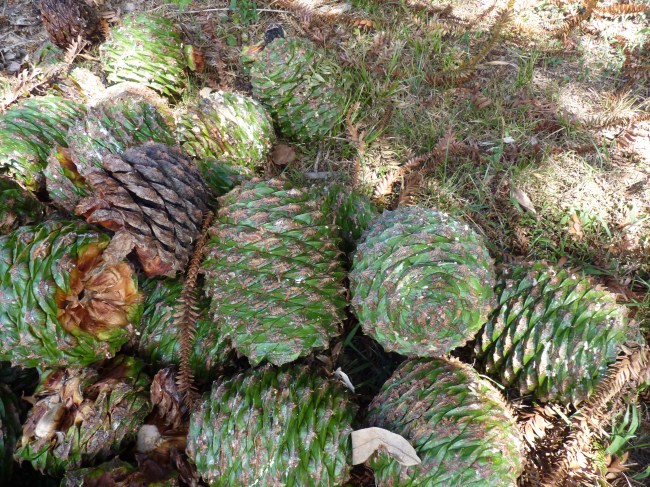
The last time it happened we split open the fruit to extract the kernels. The fruit, that are the size of large footballs, are what you might call ‘multi-loculated’ – but not in the sense of a disease of course. You break it open into its segments and then expose the kernels by removing them from their shells. This can be tough. Needle-nose pliers were used the first year but that was a long and tedious process. There is a chance that we will adopt a more mechanical means this year. An angle grinder would appear to be a good bet.
The kernels or nuts are relatively large, for a nut. They are edible raw but not particularly tasty. It is better to boil them up for a while. Then it is possible to pound then down into a coarse flour. Mixed with basil or similar with a little oil they make for a very good pesto. You can also eat them roasted more or less like potatoes or slice them into a salad. The taste is not spectacular but they are well worth a try. They tend to pick up taste from other ingredients.
Bunyas don’t fruit every year and, thankfully, they don’t fruit all of the time. For us here in SE Queensland they seem to fruit every couple of years – based on a sample of just 2 years. Ours come on in January and they seem to all fall in about a month. So far this year we have had relatively small ones come down. I am not sure whether that is due to more wind, less water, the age of the trees or something else. The last fruiting we had a few small ones but more very large, clearly mature fruit. So far this year we are getting fruit of between 2 and 5 kgs. Last fruiting some were well over 10 kgs.
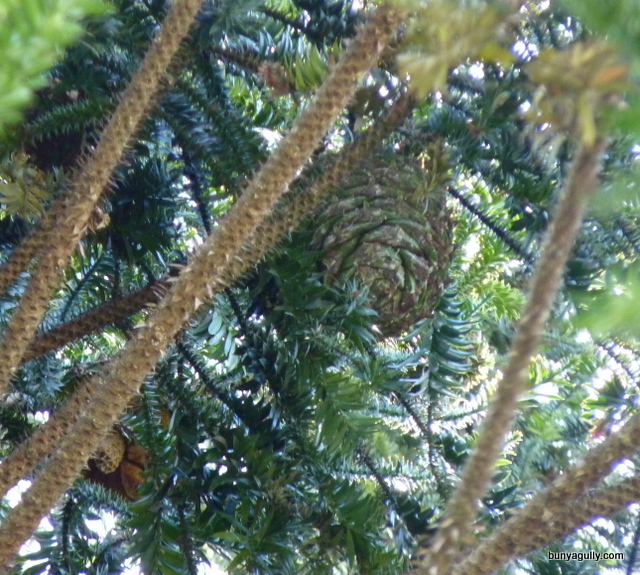
The fruit seems to form at the very top of the trees which means that they come down with a decent thump. There is generally a bit of noise as they work their way through the branches, thus giving you a bit of time to get out of the way. The branches will also break up most of the fruit on the way down, particularly if it is a large specimen thereby reducing the danger a little. As with everything on a bunya, the fruit are spiky and these spikes will easily draw blood, but then so does the bark and the leaves.
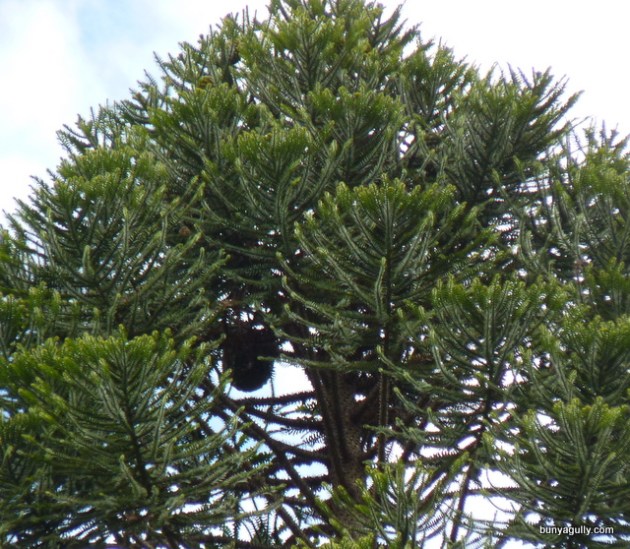
I am not too sure why the Bunyas feel the need to bomb us but I guess if I just expressed my anger or frustration once every 2 or 3 years I would be doing well.
I might just work in the shed or the open for the next couple of weeks.
 bunyagully